Rape and Sexual Assault in the Context of Intimate Partner Violence
3:00
Sexual Violence Within Relationships
Prevalence in Relationships
10-14% of married women experience spousal rape
40-45% of domestic violence includes sexual violence
Often occurs alongside physical abuse
Severely underreported
Historical Context
Why It's Different from Stranger Assault
Ongoing access to victim
Embedded in pattern of control
Betrayal by trusted partner
Repeated assaults over time
Forms Within Relationships
Reproductive Coercion
Sabotaging birth control
Forcing pregnancy or abortion
Controlling reproductive healthcare
Using pregnancy to trap partners
Connection to Other Abuse
Why Victims Don't Leave
Barriers to Disclosure
Shame and self-blame
Fear of not being believed
Cultural stigma around sexuality
Loyalty to partner despite abuse
Myths About Intimate Partner Sexual Violence
The Impact is Severe
Complex trauma and PTSD
Depression and anxiety
Physical injuries and health problems
Difficulty with trust and intimacy
Recognizing the Signs
Responding with Understanding
Slide 1 of 13
The Intersection of IPV and Sexual Violence
Rape and Sexual Assault in the Context of Intimate Partner Violence
Most sexual assault is committed by someone the survivor knows. This is often referred to as acquaintance rape, but if you were asked to name an acquaintance, you might think of a classmate, a coworker, or a friend—not someone with whom you're in a long-term relationship or someone to whom you are married.
Intimate partner violence can include sexual assault. This can be both surprising and confusing to the public and even to individuals new to working with survivors. In fact, this concept is still presented as shocking news in popular culture and media.
Click each section to explore how these forms of violence intersect
Critical Understanding: Intimate partner sexual violence sits at the intersection of two forms of abuse, carrying the impacts of both while presenting unique challenges for survivors.
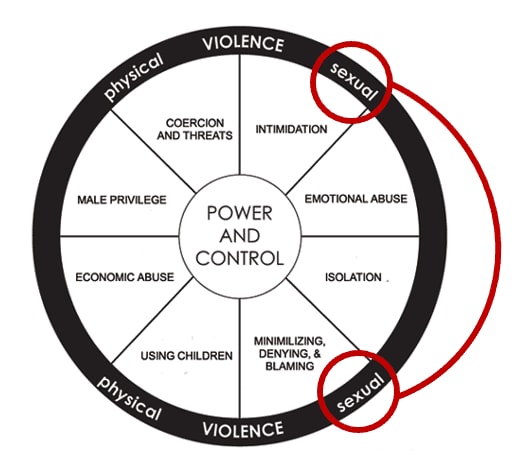
Sexual Violence and the Power and Control Wheel
Using Intimate Partner Sexual Violence for Power and Control
When intimate partner sexual violence is present in an abusive relationship, it is often used alongside other types of abuse on the Power and Control Wheel. It can be physical, visual, or verbal, and take place individually or in any combination.
Interactive Power & Control Wheel
Toggle the switch to see how sexual violence connects to each tactic
Standard ViewSexual Violence Layer
Click a section of the wheel to explore how it connects to intimate partner sexual violence.
The Punishment Dynamic: If the survivor doesn't respond to threats or abuse in ways that make the abuser feel empowered, sexual assault may be used as punishment. This threat can be explicit, implied, or part of a larger pattern of control and coercion.
Barriers and Support
Click or tap each card to explore barriers survivors face, how to support them, and common reactions
🚧
Barriers
Obstacles to identifying intimate partner sexual violence
Click to explore →
Barriers to Recognition
Conceptual Barriers:
Viewing sex as "spousal duty"
Assuming relationships mean passive consent
Classifying experience as "sex" not "violence"
Difficulty reconciling love with harm
Hesitance to define partner as "rapist"
Legal & Social Barriers:
Until 1976: spousal rape exempted from laws
1993: All states repealed exemptions
Many states still treat marital rape differently
Some states consider it a lesser crime
🤝
Supporting Survivors
How to respond when someone discloses
Click to explore →
Supporting Survivors
When someone discloses their experience to you, it signals they believe you can be trusted.
Critical Response Elements:
Listen without judgment
Build trust through actions and words
Maintain safety and confidentiality
Accept they may be uncomfortable with full details—that's okay
Create an environment where they feel safe, heard, and believed
💭
Survivor Reactions
Common responses to intimate partner sexual violence
Click to explore →
Common Reactions
There is no "right way" for a survivor to react. Common responses include:
Abusers may use these reactions to further the abuse—using insults or threats to keep survivors isolated.
Remember: Understanding barriers helps you recognize why survivors may not identify or report. Your response can make the difference between someone feeling heard or further isolated.
Quiz
Question 1 of 3
Prevalence and Underreporting
What percentage of women in abusive relationships are also sexually assaulted during the course of the relationship?
Legal History
When did all fifty states finally repeal their spousal rape exemptions?
Trauma-Informed Response
When a survivor of intimate partner sexual violence discloses to you, what is the MOST important response?