Types of Abuse
Types of Abuse
2:54Recognizing Different Forms of Abuse
What Does Abuse Actually Look Like?
Recognizing intimate partner violence involves more than just identifying bruises or waiting for someone to show up in the emergency room. It is also not a single moment in time, but a pattern of actions that compound.
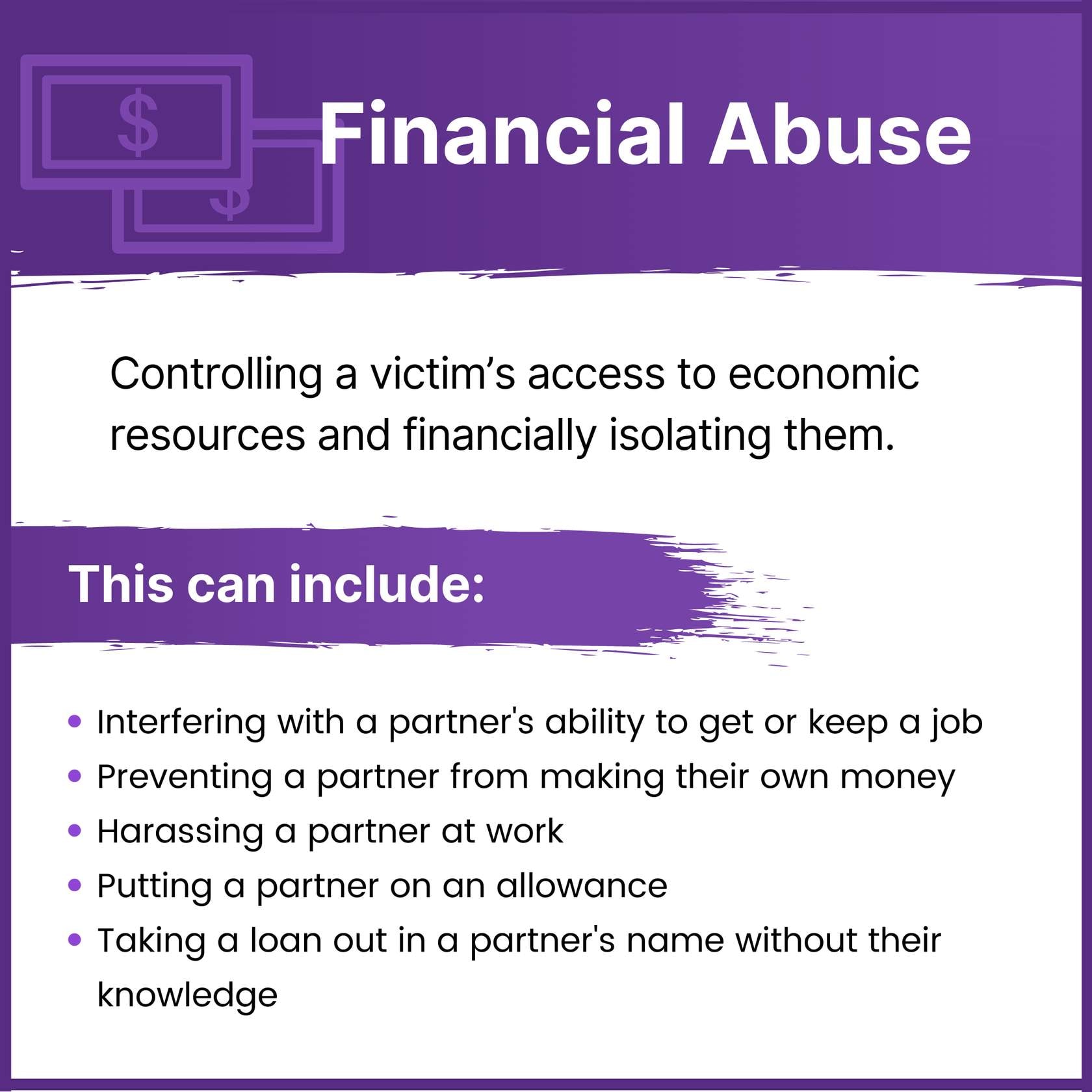
Intimate partner violence can take many forms, and understanding each type is essential for recognizing abuse when it occurs. Click each type below to explore its definition and examples.
Practice: Recognize the Abuse
Read each scenario and identify which type(s) of abuse are present. Remember: abuse types often overlap.
Sarah's Story
Sarah's partner constantly checks her phone and emails. He demands to know where she is at all times and gets angry if she doesn't respond to his texts immediately. He's told her that her friends are "bad influences" and has gradually convinced her to stop seeing them. When Sarah mentions feeling isolated, he tells her she's "too sensitive" and that he's "just trying to protect her."
Marcus's Situation
Marcus's partner controls all their bank accounts and credit cards. She gives him a small "allowance" each week and requires receipts for everything he purchases. When Marcus got a promotion at work, she became angry and accused him of "trying to show her up." Last month, she secretly opened a credit card in his name and maxed it out. Marcus isn't allowed to see any financial statements.
Jamie's Experience
Jamie's partner becomes violent when angry, pushing and shoving during arguments. Last week, Jamie had to call in sick to work because of visible bruising. When Jamie tries to leave during fights, the partner blocks the door. After violent incidents, the partner is extremely apologetic, promises to change, and buys expensive gifts. The partner also frequently tells Jamie that "no one else would ever want you" and that Jamie is "lucky" to be in the relationship.
💡 Key Insight: As you work through these scenarios, notice how abuse types rarely occur in isolation. The presence of one type often indicates others are present too. This overlapping pattern is characteristic of intimate partner violence.
How Abuse Types Overlap
Relationship Between Types of Abuse and Escalation of Harm
It is important to note that survivors can experience several types of abuse at once. Often, people who cause harm will use multiple strategies to gain coercive control in their relationship, layering each on top of the others to intensify their effect.
A Critical Pattern:
In most cases, physical and sexual violence in an intimate relationship means there is already a history of controlling behaviors.
For example, in a 2006 study, Maria A. Pico-Alfonso et al. found that "while some subjects experienced only psychological abuse, all those who experienced physical abuse were also subjected to some form of psychological abuse."
What This Means:
- Psychological abuse often comes first and creates the foundation for other forms of abuse
- Physical violence rarely happens in isolation—it's typically part of a larger pattern of control
- Multiple forms of abuse working together create a more powerful system of control
- Understanding this overlap helps professionals like Dr. Patel recognize early warning signs before physical violence occurs
Moving Forward
Understanding Power and Control
You have examined types of abuse and how they can overlap. Next, you look more closely at how these behaviors can create a relationship where one partner has power and control over the other.
To do this, you explore the use of one of the most common tools in this field—the Domestic Abuse Intervention Program's Power and Control Wheel.
This tool helps illustrate:
- How different abusive behaviors work together
- The systematic nature of intimate partner violence
- How control is established and maintained in relationships
- Patterns that may not be visible from looking at individual incidents
Understanding these connections prepares you to better support survivors and recognize abuse in all its forms.
Quiz
Question 1 of 3
Types of Abuse
Which of the following is an example of ECONOMIC abuse in an intimate partner relationship?