Power and Control Wheel
Power and Control Wheel
3:00The Domestic Abuse Intervention Program's Power and Control Wheel
How to Use the Power and Control Wheel
To use the Power and Control Wheel, begin by familiarizing yourself with the individual components.
The Inner Sections
On the whole, the inside of the wheel contains subtler, continual behaviors. Click on each tactic below to explore detailed definitions:
The Outer Ring
The outer ring contains more visible violence such as physical and sexual assault.
How They Work Together:
The violence depicted on the outside of the wheel often reinforces the regular use of the subtler methods of abuse shown on the inside of the wheel. When tactics on the inside of the wheel stop working, then the abuse may escalate to physical and sexual assault. The outer ring works as both a threat of escalation and as the end result of the escalation itself.
The Threat Changes Everything
From Unhealthy to Abusive
You'll notice some of the characteristics and behaviors that appear inside the wheel might occur in many relationships at varying degrees. The threat of physical and/or sexual violence, however, adds an emphasis to the other tactics that increase the likelihood of compliance by the partner being abused.
The Critical Difference:
The very presence of the outer ring changes the dynamic from an unhealthy relationship behavior to abuse or intimate partner violence.
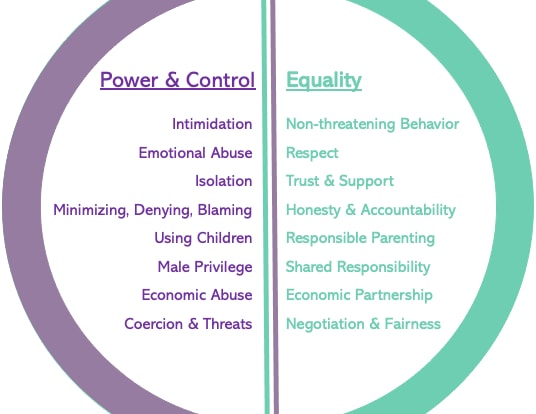
The Equality Wheel
We know people who cause harm can change, however. With this in mind, the Duluth Abuse Intervention Project created an Equality Wheel to accompany the Power and Control Wheel. The Equality Wheel shows the healthy behaviors that partners should use in their relationships instead of the controlling behaviors shown in the Power and Control Wheel.
Interactive Power and Control Wheel
Click or use keyboard (Tab/Arrow keys/Enter) to explore each tactic
Use Tab to navigate, Arrow keys to move between sections, Enter/Space to select
Select a Section
Click on any section of the Power and Control Wheel or use your keyboard to navigate (Tab, Arrow keys, Enter) to learn more about each tactic and how it's used to maintain power and control in relationships.
A Tool for Recognition and Understanding
Intimate partner violence service providers use a variety of tools to help survivors and perpetrators recognize and identify their experiences. One of the most common and powerful tools to aid survivors, service providers, and people who cause harm in describing and recognizing patterns of abuse is called the Power and Control Wheel.
Origins of the Wheel
In the early 1980s, Ellen Pence and her colleagues at the Domestic Abuse Intervention Project (DAIP) in Duluth, MN created the Power and Control Wheel. To create the model, Pence and the DAIP team interviewed survivors of intimate partner violence to identify their common experiences.
Pence and the Duluth team took great pains to document the most common abusive behaviors, or "tactics," that were used against the women they interviewed. The wheel they created includes the tactics that were most universally experienced.
Important to Remember:
As with all models, it is important to remember that not all survivors experience abuse in the same way, but that does not invalidate anyone's experience or mean that what they experienced is not abuse.
Understanding the Wheel's Structure
Interactive Equality Wheel
Click or use keyboard (Tab/Arrow keys/Enter) to explore healthy relationship behaviors
Use Tab to navigate, Arrow keys to move between sections, Enter/Space to select
Select a Section
Click on any section of the Equality Wheel or use your keyboard to navigate (Tab, Arrow keys, Enter) to learn about healthy relationship behaviors that promote equality and non-violence.
Comparing the Wheels:
Notice how the healthy behaviors inside the Equality Wheel are reinforced by the non-violence on the outside of the wheel. Using the Equality Wheel to speak with survivors about intimate partner violence can help them see their experience in a different way—especially for individuals who are resistant to calling their experience abuse.
By seeing the healthy behaviors and actions next to the unhealthy ones in the Power and Control Wheel, survivors may have a breakthrough they may not have had otherwise when presented with the dichotomy of behaviors.
Quiz
Question 1 of 3
Wheel Structure
What is the main difference between the behaviors shown on the INSIDE versus the OUTSIDE of the Power and Control Wheel?